

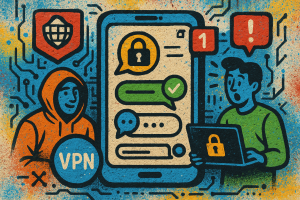
In an increasingly remote-first world, digital nomads are redefining the boundaries of work and travel. But with freedom comes responsibility—specifically, protecting your digital identity across open networks and unfamiliar systems. While Virtual Private Networks (VPNs) and secure browsers are two of the most touted privacy tools, how do they compare? Which serves the digital nomad lifestyle best? In this article, we’ll break it down using a data-backed approach to help you make the right decision for your digital journey.
Understanding the Essentials: What Are VPNs and Secure Browsers?
VPNs encrypt your internet connection, routing your traffic through an external server to mask your IP address and protect your data from third-party surveillance, especially important over public Wi-Fi. They’re excellent for bypassing geo-restrictions and enhancing privacy.
Secure browsers, on the other hand, are built with privacy-first architecture. They block trackers, fingerprinting attempts, and sometimes even obfuscate your browser behavior to make you harder to identify online. Popular examples include Brave, Firefox with privacy add-ons, and Tor.
Comparing the Two: A Data-Driven Perspective
A 2023 study by Consumer Reports revealed that 67% of public Wi-Fi users expose device data unknowingly. VPNs mitigate this by encrypting traffic. However, only 45% of VPN users understand their provider’s privacy policy, raising concerns about third-party trust.
Conversely, secure browsers offer transparency and local control. In the same study, robust browsers like Brave blocked up to 90% of third-party trackers out of the box. But they don’t encrypt traffic, making them vulnerable on public networks unless paired with additional tools.
Performance and Accessibility for the Nomadic Lifestyle
Digital nomads are often on mobile hotspots, juggling intermittent connectivity. VPNs can slow down connections due to encryption overhead. A test by PCMag in 2022 showed that using a VPN could reduce internet speed by up to 30% depending on the provider and server chosen.
Secure browsers consume fewer resources and maintain better performance in restrictive network environments, which makes them ideal for rapid research, communication, and remote work. However, they lack the holistic network protection VPNs offer outside the browser.
Security Gaps and Complementary Coverage
Relying solely on either tool might leave gaps. A VPN won’t stop a website from fingerprinting your browser, while a secure browser won’t protect other internet-facing apps on your device. According to Norton Labs, identity theft is 2.7 times more likely when only partial privacy tools are used.
The ideal strategy? Combine both. Use a reliable VPN for network-level encryption and pair it with a secure browser for tracking resistance and privacy inside your browsing experience. Together, they create a privacy armor well-suited to the borderless habits of digital nomads.
Integration and Ease of Use: Streamlined Privacy
Managing multiple tools can be a distraction. As modern digital nomads, you deserve simplicity and precision. That’s where platforms like xapp.zone excel. By helping you organize messages in one place, manage digital footprints, and monitor your online identity from a single dashboard, XAPP ensures that your tools work as seamlessly as your travel plans.
Choosing between a VPN or a secure browser no longer has to be a compromise. Tools like XAPP help integrate them into a cohesive privacy protocol aligned with your on-the-go lifestyle.
Real-World Scenarios
Let’s say you’re working from a co-working space in Bali. With a VPN, your traffic is encrypted, preventing rogue access points from sniffing your logins. Meanwhile, your secure browser blocks browser-based threats as you respond to freelance proposals across multiple platforms. Together, they form a digital fortress without disrupting your mobility or user experience.
Without either? You risk session hijacking, identity tracking, and data leaks—issues that could derail not just your work, but your digital reputation.
What to Look for When Choosing Tools
- For VPNs: Choose providers with a no-logs policy, strong encryption, fast connection speeds, and multi-location support.
- For browsers: Prioritize integrated anti-tracking features, HTTPS upgrades, and customization options for privacy settings.
- For platforms: Look for tools like XAPP that centralize your digital life, making it easier to manage, protect, and prosper as a digital nomad.
The Verdict: Converge for Total Control
VPNs and secure browsers aren’t adversaries; they’re teammates. One protects your data in transit, the other guards your behavioral footprint. Relying on one over the other is like locking your front door but leaving the windows wide open.
Digital nomads must take a comprehensive approach to privacy that complements flexibility with security. Start with the tools that serve your needs now—but as your journey evolves, so should your digital defenses.
At XAPP, we’re here to help you do just that—to organize messages in one place, manage your identity seamlessly, and protect your freedom in the digital wild. Because being untethered should never mean being unprotected.
Explore our services today and build a privacy strategy as mobile as you are.